Where Technology, Creativity, and Mission Converge
Interview with Cyrus Mirakhor COO of Thalocan Research Innovations
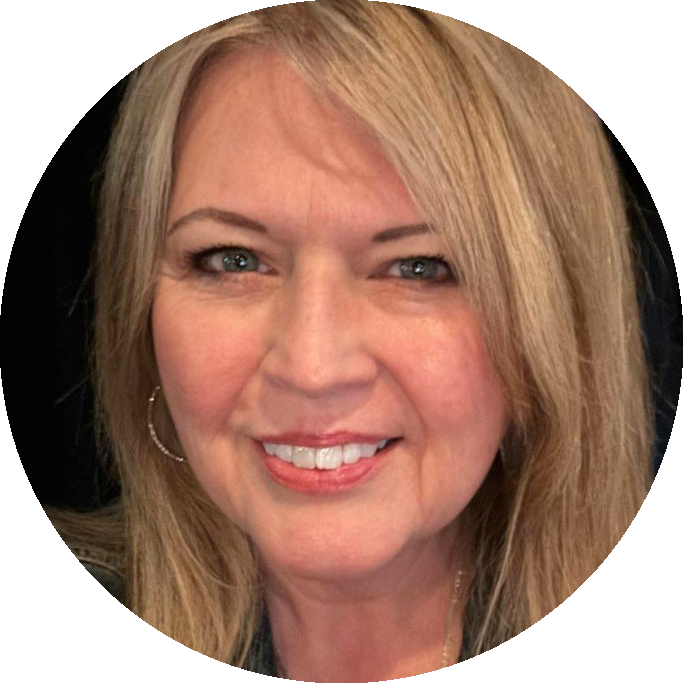
by Ginger Claremohr, Claremohr Writing Co.

If you ask Cyrus Mirakhor what he does, he’ll be the first to admit it isn’t always easy to explain.
As Chief Operating Officer of Thalocan Research Innovations, Cyrus works at the intersection of technology, training, and clinical research, specifically within the complex world of autoimmune dermatology clinical trials. But beneath the technical language is a simpler mission: helping ensure that promising therapies are evaluated clearly and consistently, so effective treatments can reach the patients who need them.
“At the core, we’re here to support pharma companies in getting powerful, relevant drugs approved,” Cyrus explains. “There are far more people suffering from autoimmune skin diseases than most realize, and the clinical trial process has to be able to capture meaningful, high-quality data to support those therapies.”
A Career that Comes into Focus
Cyrus’s path to Thalocan is anything but linear. Along the way, he has worked in Silicon Valley startups, advanced telemedicine and remote collaboration at the National Institutes of Health (NIH) and Department of Health and Human Services (HHS), and created award-winning films. What initially looks like a winding path, however, reveals a clear throughline.
Early in his career working with the NIH and HHS, Cyrus pioneered projects that converted film-based radiology to digital imaging, implemented early DICOM workflows, and helped bring large-scale streaming media platforms from pilot to production. He supported telemedicine, teleconferencing, and remote collaboration systems that made medical research and education more accessible.
“That was the first time I really felt aligned with a mission,” he says. “Supporting medical research, helping information move efficiently so it could help people…that mattered to me.”

Later, in the startup world, Cyrus honed the skills that now define his role at Thalocan: translating abstract problems into solvable technical systems, guiding teams through development cycles, and building tools that actually get used.
Even filmmaking, he notes, fits naturally into the mix.
“Making a film is essentially building a startup. You define a product, raise funding, assemble the right team, manage production, and think about how it’s ultimately delivered and experienced. That mindset shows up everywhere in my work now.”
Solving the Right Problems
When Cyrus first entered the clinical trial space, he didn’t arrive with preconceived notions. Instead, he did what he’s always done best: listened.
“As we started talking with customers, the problems became clear,” he says. “Once you understand the pain points, the technical solutions start to reveal themselves.”
At Thalocan, that means addressing the often-overlooked processes behind clinical outcome assessments: how investigators are trained, how assessments are standardized, and how data quality can be improved without adding burden.
“If a drug isn’t effective, the data should show that,” Cyrus explains. “But you don’t want a good drug to fail because the process for capturing outcomes wasn’t consistent or well-designed.”
That philosophy underpins Thalocan’s tools, including its training platforms and applications like LAMA, which bring structure, clarity, and usability to complex clinical workflows.
When It’s Working
For Cyrus, success is often visible in real time.
“You know you’re onto something when people see the product and say, ‘Oh my god, we really need this.’ Seeing that reaction, especially at conferences or during demos, is incredibly energizing.”
But beyond the immediate feedback, his focus is long-term. He’s motivated by incremental progress: tools being adopted, data proving useful, and systems uncovering insights.
“The goal keeps moving,” he admits. “It’s a series of small wins that build toward something meaningful.”
A Team Built on Creativity and Care
Cyrus is quick to point out that none of this work happens in isolation. “Thalocan’s team is intentionally small, collaborative, and aligned around quality and purpose.”
“We work with team players who care about doing things well and believe in the mission. There are real people on the other end of this work. That matters.”
He also sees creativity as a defining advantage. Many members of the Thalocan team bring creative backgrounds alongside technical expertise, a combination Cyrus believes will only become more valuable in the future.
“Creativity isn’t just about making art. It’s about making things easier to use, easier to understand, and easier to adopt. Whether it’s a film or an application, the goal is the same: help people engage without friction.”
Looking Ahead
When asked what excites him about the future, Cyrus points less to trends than to execution.
“For Thalocan, it’s about getting the right tools into the right hands and seeing them used the way we intended,” he says. “Solving small problems that make life easier for investigators, site staff, sponsors, and CROs, that’s where the real impact is.”
After a career that spans technology, creativity, and healthcare, Cyrus sees his current role as a convergence point.
“It’s a unique mix of experiences, but it all feels natural now. Everything I’ve done has led here.”
And at Thalocan, that convergence is helping shape a more thoughtful, human-centered approach to clinical trial outcome assessment: one designed not just to generate data, but to move meaningful treatments forward.
Others on the Thalocan Team