Making Understanding Possible
A Conversation with Christopher Gerson
Director of Production, Thalocan Research Innovations
by Ginger Claremohr, Claremohr Writing Co.

Chris Gerson doesn’t describe his work as making videos. He describes it as “making understanding possible.”
“Storytelling is about helping people see clearly,” he explains. “In medicine, clarity isn’t just aesthetic. It shapes outcomes.”
“The way the brain works is that we learn through story,” he adds. “If you want someone to understand a clinical trial or how to administer a test, you have to lay it out in a way their mind can follow from beginning to end.”
At Thalocan Research Innovations, that way of thinking shapes how clinical education is developed. As Director of Production, Chris helps turn complex dermatologic knowledge into training that clinicians can understand and apply.
From Stage and Screen to Clinical Education
Chris came to Thalocan with a background very different from most people in medical education. He spent years as an award-winning filmmaker and editor, produced Live@Sundance for the Sundance Film Festival, worked with Walt Disney Imagineering, and built a career in professional theatre, much of it devoted to Shakespeare.
“Moving into healthcare seems like a departure from that creative world, but in many ways it’s an extension of it.”
Earlier work at Trifecta Clinical introduced him to the discipline of regulated medical media. That environment reshaped how he approached production. Creativity still plays an important role, but it reaches beyond holding the audience’s attention. The stakes are different when the work shapes how doctors care for their patients.
Production as Clinical Strategy
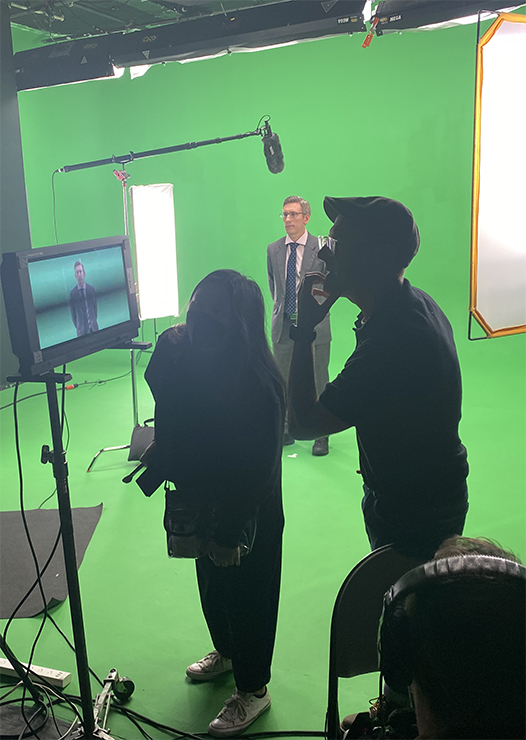
At Thalocan, Chris leads far more than cameras and edit suites. He oversees each project from early concept and scripting through clinician collaboration, regulatory review, and final delivery.
Every project starts with two expectations: the expertise of physicians must be respected, and the science must remain exact. At the same time, the material has to be clear enough to teach.
“Good production is invisible,” he says. “If a clinician finishes a module and simply understands the disease better, we’ve done our job.”
In areas such as hidradenitis suppurativa, physicians must evaluate lesions and track changes over time. Well-designed training helps ensure those measurements are made consistently across practitioners.
Video is an integral part of how clinical ideas are explained and taught. The work often draws on both scientific rigor and creative thinking, a combination the company sees as essential when tackling complex clinical problems.
“All solutions require creativity,” Chris says. “The only way to solve anything is through creative thought.”
He believes that mindset belongs in clinical work just as much as it does in film or theatre.
“People don’t always recognize it, but if you’re solving a problem, you’re already thinking creatively.”
In Chris’s view, removing creative thinking from fields like clinical trials or medical training would be a mistake. Complex problems require it.
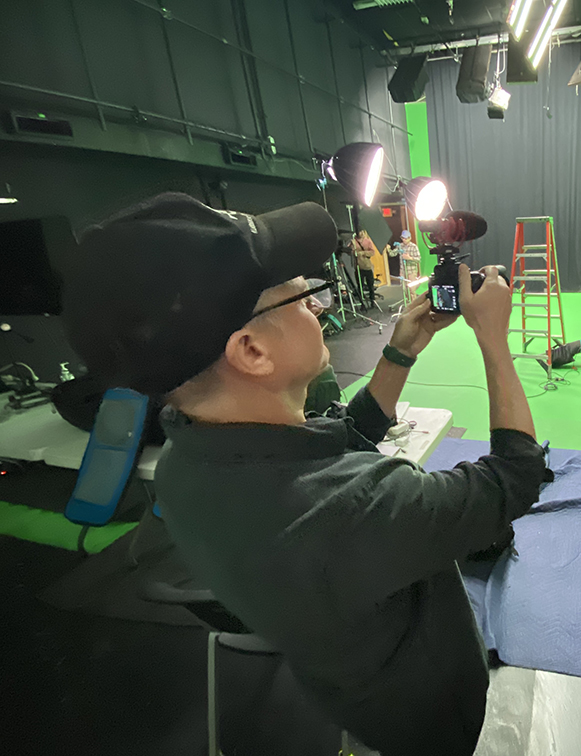
Helping Experts Tell the Story
A large part of Chris’s work is human rather than technical. Many subject matter experts are not used to being on camera, and clinical nuance does not always translate easily to a visual format.
He works closely with physicians to preserve their intent while helping them communicate in ways learners can absorb. The process starts with listening carefully and respecting the expertise in the room.
“Clinicians need to know we’re partners, not polishers,” he says. “Our job isn’t to simplify the science. It’s to make the science usable.”
He often compares the work to performing Shakespeare.
“When you’re working with Shakespeare, you don’t get to say the play doesn’t work,” he says. “If something isn’t landing, that’s on you. You have to work harder to make the language precise.”
Creating Systems for Growth
As Thalocan grows, Chris has focused on building production processes that keep the work consistent. Storyboards, version tracking, and structured reviews help ensure that every project meets the same standard of accuracy.
Those systems also allow the team to take on new therapeutic areas without losing the discipline that clinical education requires. The framework makes it possible to expand the work without reinventing the process each time.
The Thread That Connects It All
Looking back, Chris sees a clear line between his earlier creative work and what he does today. Theatre taught him how audiences learn through emotion and structure. At Disney Imagineering he learned the value of systems and collaboration. Film demanded precision and rhythm.
At Thalocan, those lessons continue to guide his work.
“Whether it’s Shakespeare or clinical endpoints,” he says, “you’re still asking the same question: how do we help people truly see what they need to see?”
For Chris Gerson, that question has simply found a new stage.
Others on the Thalocan Team