Speaking the Same Language:
Continuous Improvement at Every Level
A conversation with Maggie Ellis, founder of Fluent Fox Language Solutions
and a valued partner in Thalocan’s culture of continuous improvement.
by Ginger Claremohr, Claremohr Writing Co.
Fluent Fox
Language Solutions
Long Before Brazil
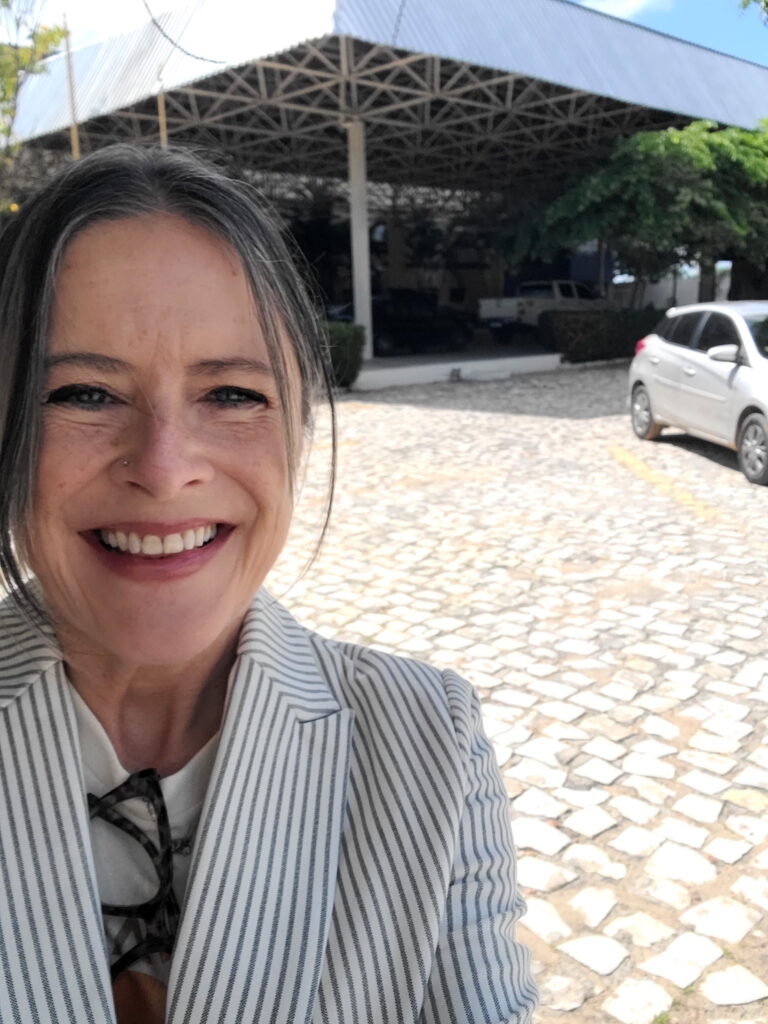
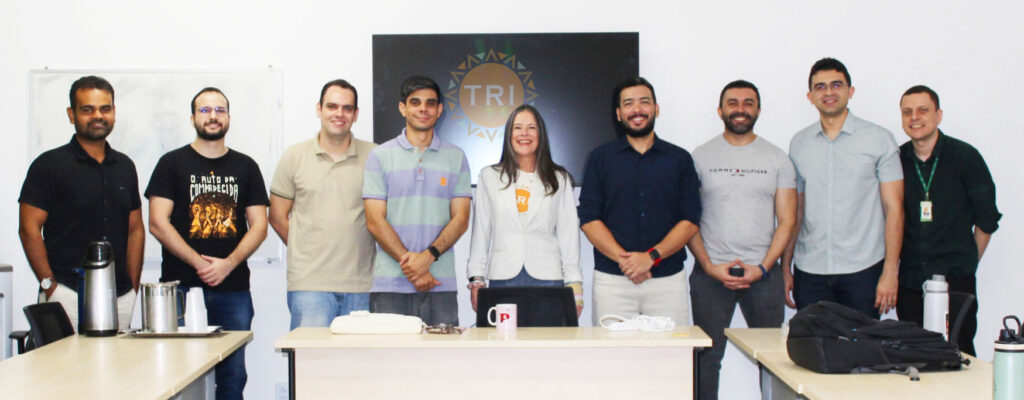
When Maggie Ellis traveled to Brazil, she described the experience as something that felt, in her words, “a little magical.”
This was where the work was happening. The development team she had supported from afar was building and iterating in real time from offices on the IFRN (Federal Institute of Education, Science and Technology of Rio Grande do Norte) campus in Pau dos Ferros, Brazil. But what she discovered wasn’t just technical excellence. It was something more foundational. And it started long before she arrived in Brazil.
Maggie didn’t originally set out to work with software developers in a clinical research environment. Her path began years earlier in Guatemala, where she trained to teach English as a second language. What started as something she did “just for fun” grew into much more.
“I’ve literally met thousands of people,” she says. “It’s just been a rewarding experience.”
Today, through her work with Fluent Fox Language Solutions, Maggie partners with global teams to strengthen communication in professional environments. As part of that work, she supports approximately thirty members of Thalocan’s extended development team, some seasoned professionals, others still students, helping them build the language skills needed to operate confidently in a fast-moving, highly technical setting.
The Work Behind the Work
At first glance, language training might seem peripheral to the kind of work Thalocan does. In reality, the work requires a high degree of precision. Clinical trial endpoints, rater assessments, and standardized data collection depend on clarity at every level. When teams are working across languages, even small misunderstandings can introduce delays or inconsistency.
“I originally thought Thalocan was just doing this as something good to give back,” she says. “But as time has gone on, I’ve realized how important it is.”
That importance shows up in subtle but meaningful ways.
Meetings run more smoothly. Concepts become clear. Words that weren’t previously part of someone’s working vocabulary begin to appear naturally in conversation.
As Eric Zudak, CEO of Thalocan, put it, “I can tell when there’s a word Maggie has been working on with them. It’s a word they wouldn’t have used before.”
The work itself is highly tailored.
Maggie listens closely to how the American team communicates, where breakdowns occur, and what concepts need reinforcement. From there, she builds sessions that focus not just on grammar, but on clarity and confidence.
Sometimes that means explaining business idioms. Other times, it’s as specific as finding a simpler word to replace one that’s difficult to pronounce.
Even distinctions like “started” versus “finished” become important when teams are aligning on timelines and deliverables.
It’s not about perfect English. It’s about shared understanding.
When It Starts to Stick
What began as weekly sessions has grown into something more embedded.
Team members now incorporate English into their regular workflows, starting meetings with small talk in English, delivering updates in English, and practicing with one another outside of formal sessions.
Maggie has seen that growth extend beyond language.
On the Training Lab team, one integration coordinator came in with the skills but not the confidence. Through the work, that began to shift, allowing him to grow into the role and, as she described it, “catch up” to his own ability.
In some cases, the impact is deeply personal.
“This is the most important 30 minutes of my week,” one participant, a Junior Mobile Developer on the LAMA team, told her.
Others have carried the practice beyond work. A TRICOA backend developer described continuing conversations in English at home without even realizing it.
For Maggie, one of the most unexpected aspects of the experience has been the mutual exchange.
While she helps the team develop language skills, they, in turn, bring her into their world, walking her through technical concepts, and ensuring she understands what they’re building.
That collaboration reflects something essential about how Thalocan operates. Continuous improvement isn’t confined to product features or platform capabilities. It extends to the way teams collaborate and support one another across geographies.
When It All Comes Together
The impact is measurable.
During a recent audit, external reviewers noted not just the quality of the work, but the clarity of communication coming from the Brazilian team.
“They were like, ‘Where did you get these guys?’” Maggie recalls.
In an environment where auditors often look for gaps to pull apart, strong communication held firm.
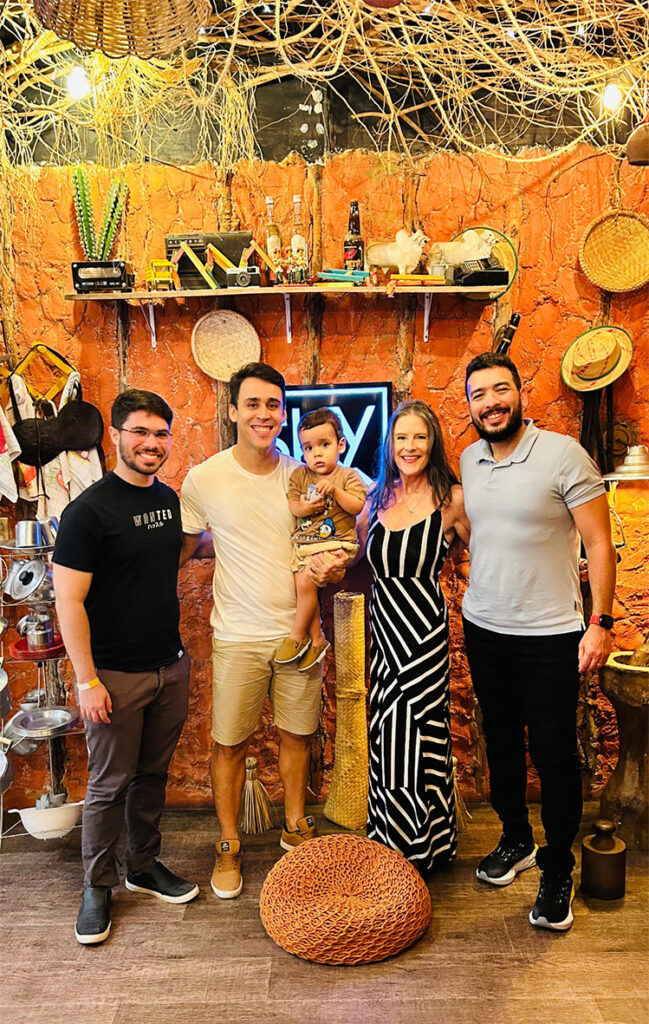
For Maggie, the experience in Brazil was unforgettable. Not because of the scenery or even the work itself, but because of the people.
“I don’t think I’ve ever felt more loved and appreciated in my life.”
There were shared meals, busy days, constant conversations, and over and over, the same question:
When are you coming back?
At Thalocan, continuous improvement doesn’t always look like a new feature or a system upgrade. It can look like a conversation, clearer and more confident than the one before. And every now and then, it leads somewhere unexpected. Somewhere that feels a little like magic.
Maggie Ellis is the founder of Fluent Fox Language Solutions , where she works with individuals and organizations to build confidence and clarity in English communication across global teams.