The Story Behind the Science
A Conversation with Paul Stroili, Vice President of Creative
by Ginger Claremohr, Claremohr Writing Co.

and Co-Founder of Thalocan Research Innovations
A Life in Stories
Long before he was helping shape the visual identity of Thalocan Research Innovations, Paul Stroili was telling stories from a stage.
For more than four decades, he has worked as an actor, director, writer, graphic designer, and creative professional. He studied acting and directing at the State University of New York at New Paltz, built a career in theater, film, and television, and eventually found a second creative home as a playwright.
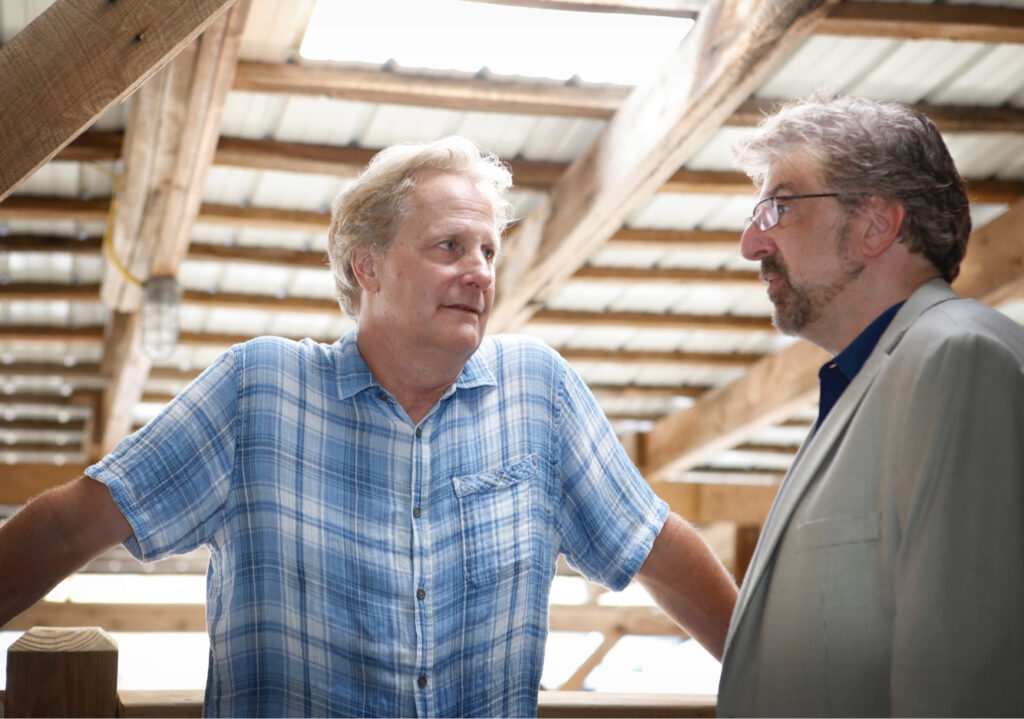
Today, Paul is one of just five playwrights-in-residence at the Purple Rose Theatre Company, the acclaimed Michigan theater founded by actor Jeff Daniels. Two of his plays have been produced on the Purple Rose stage, and a third production, There’s No Bad Ravioli, is scheduled for next season. In addition, he and Mr. Daniels are co-creating a future production.
Storytelling has been the common thread throughout his career. So, when he talks about his role as Vice President of Creative at Thalocan, he doesn’t see a dramatic shift from his previous work.
“At the end of the day, it’s all storytelling,” he said. “Everything is storytelling.”
Bringing Fresh Eyes to a New Industry
When Paul first entered the world of clinical research, he found himself immersed in an entirely unfamiliar environment. Protocols, assessment scales, endpoints, investigator training, and regulatory requirements were far removed from the theater and entertainment industries where he had spent much of his career.
“It was certainly an adult dose for me to be hurled into this world. It’s been fascinating.”
The learning curve was steep, especially as Thalocan experienced rapid growth. But Paul quickly discovered that being new to the industry offered an unexpected advantage. Rather than approaching training and technology as an insider, he evaluated everything through the eyes of someone encountering it for the first time.
“If it’s something that I, as a new person in the space, can absorb, appreciate and understand fully, then I knew that for people with more experience in the field, it would be even easier to digest.”
That perspective became an essential part of Thalocan’s approach to product design, user experience, and training development.
The Best Technology Isn’t Always Enough
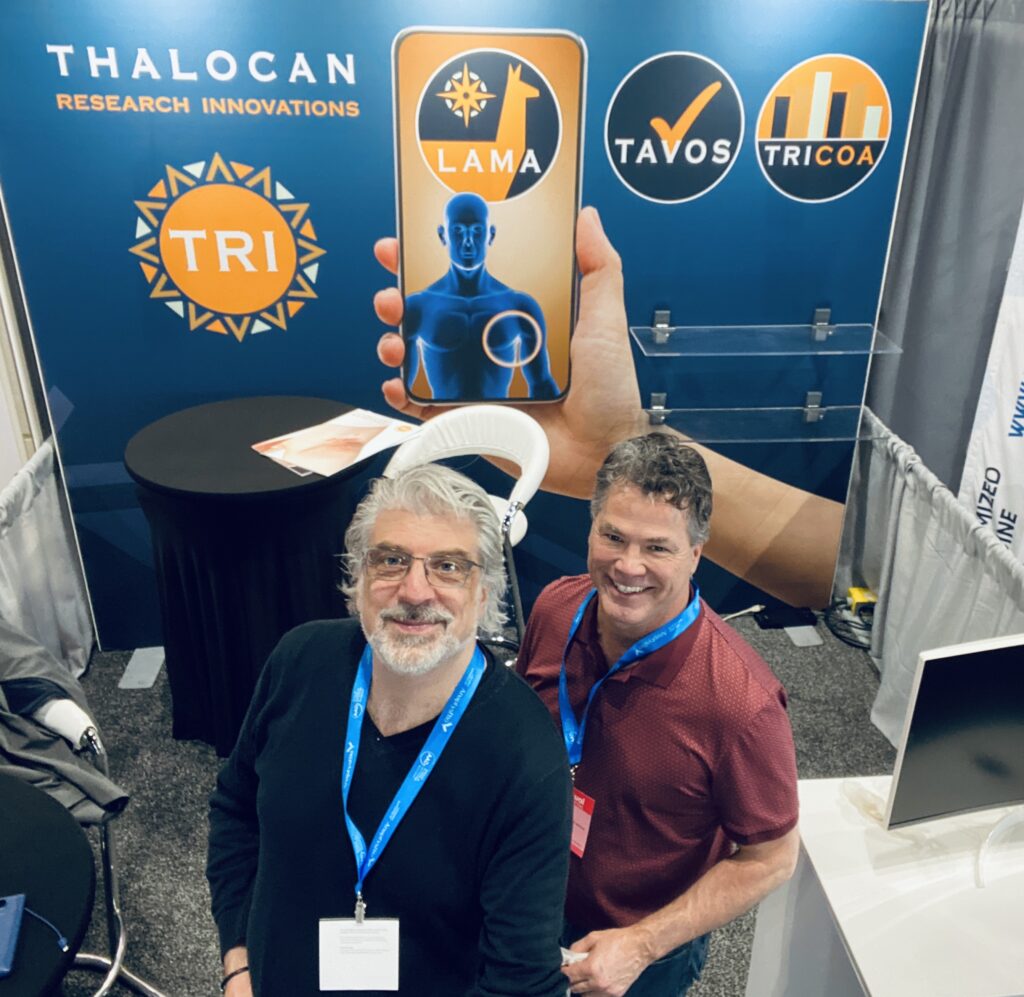
Paul oversees much of what people see when they interact with Thalocan. He helps guide the company’s branding, social media presence, product aesthetics, training design, graphic elements, and overall visual identity. His influence can be found across the company’s technologies, including TAVOS, LAMA, TRICOA, and the Learning Lab training platform.
But for Paul, design is never just about making something look good. It’s about making it easier to learn.
“The best technology in the world is of little use if it’s not engaging,” he noted.
That philosophy has shaped the company’s educational content from the beginning. Whether he is developing visual concepts, creating disease-state imagery, refining user interfaces, or helping structure training experiences, the goal remains the same: make information easier to understand, easier to retain, and easier to use.
The work may be highly technical, but the underlying challenge is familiar. Keep people engaged and help them remember what matters. In other words, tell the story well.
The Creative Work You Don’t Notice
One of Paul’s favorite observations about creative work is that success often goes unnoticed.
“If we do our jobs well, we’re invisible,” he said.
He compares creative work to music in a film. The soundtrack’s job is not to call attention to itself. Its job is to support and enhance the story unfolding on screen. The same principle applies to design.
When a training module feels intuitive, when information is easy to navigate, or when a user quickly understands a complex concept, most people do not stop to think about the creative decisions that made that experience possible. And that’s exactly the point.
Paul believes creativity plays an essential role in scientific and clinical environments, but often in a supporting capacity. The goal is not to be the center of attention. The goal is to help the science communicate more effectively.
“If people walk away from our trainings incredibly well informed and engaged, and it makes for better quality data, then we’ve succeeded.”
Building Something from the Beginning
Paul’s connection to Thalocan dates back to the company’s earliest days. In fact, he was one of the first people founder and CEO Eric Zudak contacted when the company was taking shape.
His initial involvement focused on design and branding. From the beginning, there was a shared belief that successful companies establish a consistent visual identity early, and Thalocan needed that same sense of cohesion.
Looking back, Eric describes Paul’s contribution as foundational.
“Paul reframed the priorities of the company and informed the artistic standard of our training. Through his incredible design skills, he created an expectation that we are not just ticking a box. He is enabling experts to teach at a higher level. They’ve never before had command of these design tools to give context to clinical research training.”
Over time, the role expanded significantly. Today, Paul helps guide not only how the company looks, but also how it communicates and teaches.
One of the moments that convinced him Thalocan was building something truly different came when the company’s first hidradenitis suppurativa training launched. As he compared it to other training products available in the marketplace, the difference was obvious.
The look, the feel, the quality, the depth of thought that went into the craetion of the Thalocan trainings transcended anything else I saw out there.”
Just as importantly, he recognized that the result was not the work of any single individual. Developers, clinicians, scientists, designers, project leaders, and subject matter experts all contributed to the final product.
“It’s all collaborative,” he said. “People weigh in, they share their thoughts, and together we’re creating something that can redefine this learning space.”
Creating Something That Helps People
After spending much of his career entertaining audiences, Paul has found a different kind of fulfillment in clinical research. The creative process and storytelling are still there. But now the work has a direct connection to patient outcomes.
That became especially clear during the recent American Academy of Dermatology conference, where Paul saw firsthand how strongly clinicians and industry professionals were responding to Thalocan’s solutions. In just three years, awareness of the company has grown dramatically. More importantly, people immediately understand the value of what the team is building.
Again and again, visitors reacted with the same response.
“Oh my God, I need this.”
“Why haven’t I seen this before?”
“This is going to help people.”
For Paul, those moments are deeply rewarding. A successful play can entertain an audience. A great performance can create an emotional connection. But helping improve clinical education, data quality, and research outcomes offers a different kind of satisfaction.
By helping investigators learn more effectively and supporting more consistent clinical assessments, the work ultimately contributes to better care for people living with challenging immunodermatology conditions.
“It just fills my heart, knowing that we’re helping people,” Paul said. “It’s a joyous place to be.”